

The Magic of the Corner Gallery
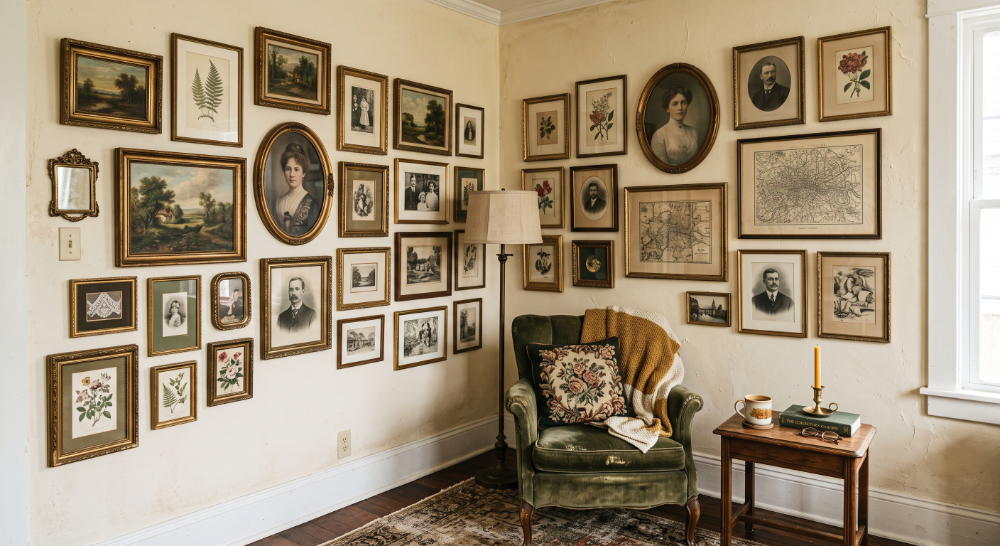
Corners are all too often the forgotten real estate of home interiors. We naturally align furniture and centre artwork along flat, dominant walls, leaving room corners quiet and untouched. Yet wrapping art across a 90-degree angle transforms a passive wall into a dynamic, three-dimensional focal point that invites curiosity from every angle.
Whether you’re decorating a cosy reading nook, framing a living room armchair, or adding character to a hallway turn, a vintage-inspired corner gallery wall brings unmatched warmth, history, and personality to your space. By pairing mismatched frames, original paintings, and vintage artefacts, you can turn an awkward architectural junction into a captivating feature.

Planning the Corner Layout: The Secret to Balance
Unlike standard flat gallery walls, a corner arrangement requires you to consider how two vertical planes interact. The corner crease creates a visual line that can either divide the artwork or seamlessly bind it together.
Pro Tip: The Paper Template Method
Before hammering a single nail, trace each of your framed pieces onto kraft paper or newspaper and cut them out. Tape these paper templates across the corner crease using painter’s tape. This allows you to experiment with spacing, heights, and frame overlap without damaging your walls.
15 Creative Corner Gallery Wall Ideas
1: Playing with Frame Styles & Textures
- The Mismatched Ornate Gold Mix
Combine heavy, antique gilded frames with simple wood or brass profiles. The rich patina of gold leaf reflects light around dark corners, creating a warm, museum-esque feel. - Thrifted & Distressed Upcycles
Embrace worn edges, chipped paint, and aged wood tones. Sourcing second-hand frames from vintage markets brings authentic historic character that modern store-bought frames simply cannot replicate. - Round and Oval Frame Interventions
Hard 90-degree corner angles benefit from softening visual elements. Intersperse classic rectangular frames with oval or circular vintage portraits and landscape miniatures to break rigid lines. - Modern Floating Frames for Traditional Fine Art
Bridge classic and contemporary aesthetics by placing traditional original paintings—such as acrylic paper or canvas works—into sleek floating wooden frames before hanging them near the corner seam. - Unframed Impasto Canvas Highlights
Mix framed paper studies with thick, textured impasto oil or acrylic paintings on deep canvas edge boards. The sculptural quality of palette-knife paint catches side-lighting beautifully in a corner.
2: Mixing Artistic Mediums & Objects
- Pairing Heavy Acrylic Seascapes with Loose Watercolour Washes
Balance heavy visual weight with delicate atmosphere. Place bold, deeply saturated coastal acrylic paintings on one side of the corner and balance them with soft watercolour and ink studies on the adjoining wall. - Pen-and-Ink Sketches as Corner Crease Fillers
.Narrow gaps directly adjacent to the wall crease can be difficult to fill with large artwork. Use small 5×7 or 6×8 pen-and-ink wildlife or architectural sketches to bridge tight spaces seamlessly. - Incorporating Vintage Architectural Artefacts
A true gallery wall isn’t restricted to flat paper and canvas. Hang vintage brass sconces, small convex mirrors, antique keys, or carved wooden plates alongside your paintings to heighten the eclectic charm. - Tonal Harmony: Sepia Tone Meets Vibrant Colour
Ground vibrant coastal landscape colours (such as rich cerulean blues and golden sand tones) with antique sepia-toned sketches, monochromatic etchings, or old vintage maps. - Regional Nostalgia & Antique Maps
Frame historic cartography or vintage travel postcards alongside original landscape paintings of local landmarks (like Aldeburgh, Southwold, or Boscastle) to build a narrative of place.
3: Spatial & Thematic Layouts
- The Floor-to-Ceiling Corner Wrap
Maximise vertical space in small rooms or apartments by starting near the skirting board and continuing up to the ceiling line. This draws the eye upward, making ceilings feel higher. - The “Armchair Hug” Reading Nook
Concentrate your gallery arrangement low behind a cosy armchair or settee. Wrapping the artwork tightly around sitting height creates an intimate, cocoon-like atmosphere for reading. - The Staircase Landing Wrap
Staircase turns are natural candidates for corner gallery walls. Follow the diagonal incline of the stairs on one wall, then transition into a vertical grid as you turn the corner landing. - Dedicated Wildlife & Botanical Corners
Curate a dedicated thematic space by combining original wildlife portraits, vintage botanical pressings, and floral still-life paintings across both converging walls. - The Collector’s “Travel Diary” Corner
Group plein air field sketches, small studio studies, and fine art prints collected over time to turn your corner into a personal visual diary of favorite coastal walks and trips.
Hanging & Installation Advice
- Corner Clearance: Leave at least 2–3 inches of breathing room between frames at the immediate wall crease so frame edges don’t collide or cast awkward dark shadows.
- Lighting: Corners are naturally darker than central wall sections. Consider installing a warm plug-in wall sconce or an adjustable clip-on LED picture light to illuminate artwork details.
- Hanging Hardware: For light frames and paper works, high-quality adhesive hanging strips work well. For heavy antique wooden or gilded frames, always use proper wall anchors and picture wire.