

Studying a Sri Lankan Elephant in Watercolour
The initial challenge with this piece was capturing the sheer mass and density of a Sri Lankan elephant without letting the heavy watercolour and ink washes feel static or over-worked. When observing these animals, you quickly realise that their skin is an intricate landscape of its own—rough, creased, and heavily textured, yet shifting in tone as they move through the dappled light of the brush.
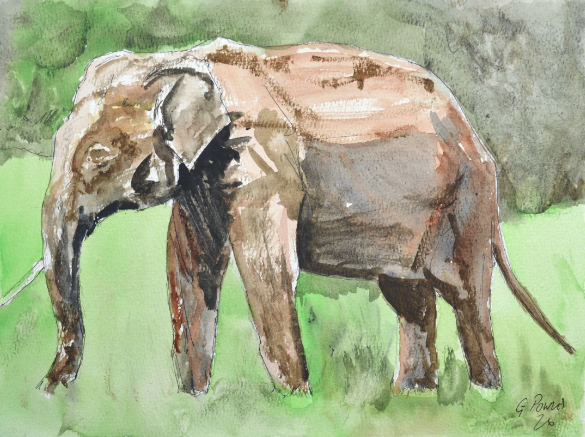

I began with loose, expressive ink work to establish the heavy contours of the body and the distinctive downward gesture of the trunk. The ink allows for a certain immediacy, capturing the weight and posture without getting lost in the details. In watercolour, the difficulty lies in balanced restraint; I wanted the paper to breathe beneath the pigment. By layering earthen browns, ochres, and muted greys, I tried to suggest the natural dust and dried mud on the hide, allowing the natural grain of the paper to do the work of indicating that rugged skin.
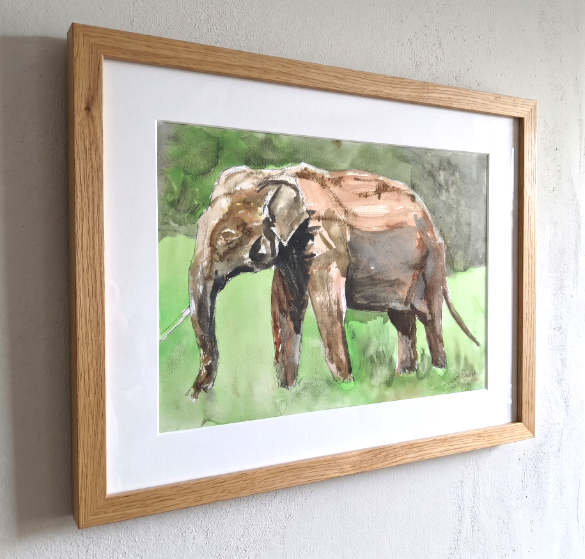

The background was kept deliberately soft and fluid—broad, wet-on-wet washes of leafy greens and dark, shadowy foliage—to place the elephant in its natural environment while ensuring the animal itself remains the grounding focus. The contrast between the broad, sweeping natural terrain and the heavy, angular structure of the elephant creates a quiet tension, a glimpse into a fleeting, heavy-footed moment in the wild.
In working on this, it wasn’t about creating a perfect anatomical replica, but rather capturing the presence, the weight, and the quiet dignity of a creature so deeply intertwined with its landscape.