
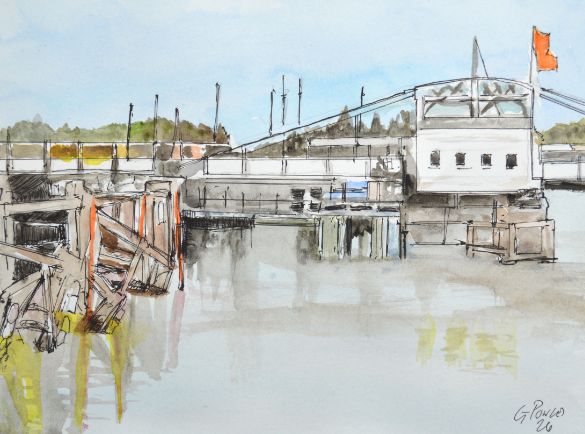
There is a quiet weight to the structure of the Oulton Broad Swing Bridge, set…
Landscape Painting Tips For Watercolour Artists
One of the biggest challenges beginners face in fine art is learning to truly connect with their inner creativity. In the beginning, it can be difficult to just let go and paint from the heart. When your mind is crowded with technical rules and rigid systems, it can drown out your natural artistic instincts. While mastering technique is essential, there comes a point where you must begin to draw from your own creative imagination.
Whether you are painting a portrait or a sweeping landscape, you must first deeply observe your subject. To paint great landscapes, you need to spend quality time immersing yourself in the environments that inspired you to pick up a brush in the first place. Only then can you truly understand how to transfer the spirit of what you see onto the page.
Becoming Intimate with the Scene
Before you even wet your brushes, take a trip out to the location you wish to paint and bring along a sketchbook and pencils. The best way to become intimate with a landscape is to spend time simply sketching it. Quick studies force you to analyse shapes, value structures, and compositions, effectively burning the essence of the environment into your senses.
Painting with watercolour directly on location—known as plein air painting—is uniquely challenging for beginners because the outdoor environment is constantly changing. Watercolour requires precise control over paper saturation and working angles, and capturing everything perfectly in a short time frame can feel overwhelming.
To take the pressure off, always bring a camera. Once you find a composition you love, take multiple photos from different distances and angles. When you return to your studio, you will have a rich combination of raw reference sketches and photos to work from. In the beginning, look for outdoor compositions that are striking but not overly complex.
Streamlining Your Outdoor Workflow
When painting on location, keep these practical tips in mind to manage the elements and improve your results:
-
Travel Light: You do not need to bring your entire studio with you. Many beginners pack far too many supplies, which quickly become a cumbersome nuisance. Bring only a limited palette of essential colours and the exact brushes required for the day.
-
Embrace Community: One of the best ways to immerse yourself in landscape painting is to find people who share your passion. Look for local art groups or online communities of landscape painters in your area. Connecting with fellow artists and planning group painting trips is an incredible way to fast-track your experience.
-
Paint Fast, Think Big: Outdoor lighting conditions and weather can change in a matter of minutes. You must learn to work quickly without becoming sloppy. Block in all of your large, foundational shapes first before you even think about adding fine details.
-
Start with the Sky: Most landscape artists block in the sky area first. Because watercolour relies on working from light to dark, establishing the pale sky early sets the tone. The color and light of the sky will heavily influence how you render every other object in your painting.
Impression Over Exact Replication
When painting detailed objects in the foreground, resist the urge to paint every single leaf or individual blade of grass. Overloading a piece with hyper-detailed elements will distract the viewer and draw focus away from your true centre of interest.
Furthermore, a painting is never meant to be an exact, mechanical replica of a landscape; it is your unique, personal impression of that scene. If you want a perfect digital copy, a photograph already achieves that.
Don’t be afraid to use your imagination. If you are painting a scene and feel it would benefit from an extra tree, a well-placed bush, or a bird perched on a branch to balance the composition, follow your instincts and add it.
Finally, if you find a location that truly speaks to you, don’t hesitate to return to it. If you painted it on a bright, sunny afternoon the first time, go back on a moody, overcast day. You will be amazed by how completely a shift in weather transforms the colours, shadows, and soul of the exact same view.
Watercolour takes patience and practice. If you ever find yourself feeling discouraged or frustrated by your progress, don’t give up. Welcome your mistakes as necessary milestones on your journey—they are exactly what will make you a master painter.

Related Posts
Comments (0)