
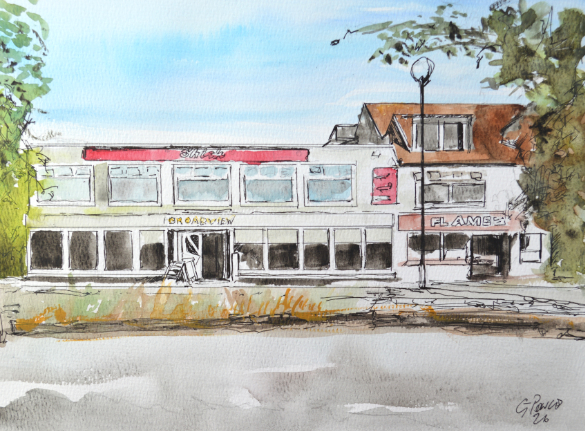
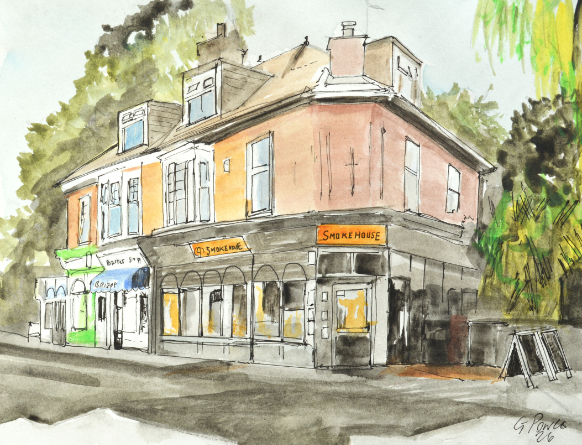
Broadview Wine Bar, Oulton Broad There is a quiet geometric rhythm to the buildings along…
Vibrant City Street
Observing the Neon and the Shadow: Thoughts on City Street
In this recent piece, Vibrant City Street, I found myself focused on translating energy into structure. The challenge of a vibrant city street lies not in rendering every window or brick, but in translating the sheer density of light and sound into paint.
To purchase this original painting, click here
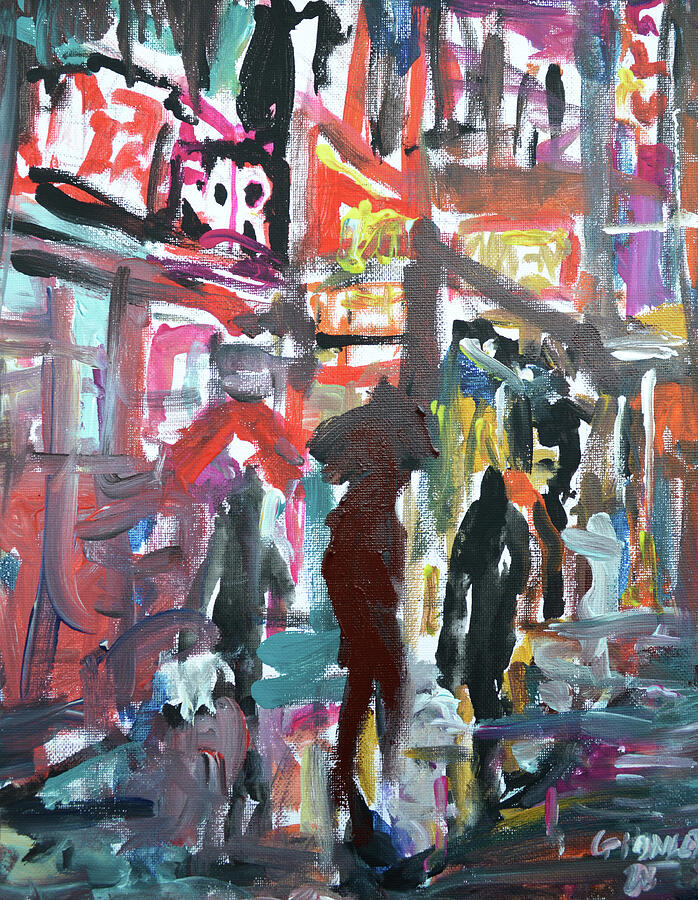
My intention was to suggest rather than define. There’s a particular frequency to urban nightlife, and the initial, visible layer of the artwork needed to capture that noise. I used broad, textured sweeps of crimson, cobalt blue, and artificial turquoise to evoke the fragmented reflections on wet pavement and the glare of neon.
The application of paint became a primary element here; it was crucial to apply it with a certain raw directness, maintaining its presence on the canvas texture rather than smoothing it away. You might notice areas where the initial vertical and horizontal brushstrokes are deliberately left visible, suggesting architectural lines through movement rather than precise rendering. This approach allows the eye to assemble the scene from abstract blocks of colour.
Set against this artificial light, I wanted the figures to feel both present and distant. You can observe the central form, rendered in deep brown and charcoal, suggesting movement and shadow without precise definition. Other figures become simply dark notations or, like the smaller forms near the foreground, merge with the reflection and atmosphere. It’s an attempt to capture how the eye perceives others in a busy urban night: fleeting glimpses, defined primarily by their relationship to the street’s overwhelming lights.
The specific markings in the upper corner, suggesting ‘FOR’ and other fragments of signage, provide anchor points, grounding the abstraction within a recognisable human context. My focus was not on creating a quiet, finished work, but a visual expression of the city’s complex, fragmented atmosphere.
The final piece is less a record of a specific place than an accumulation of moments, colours, and textures observed in the flow of the night.

Related Posts
Comments (0)